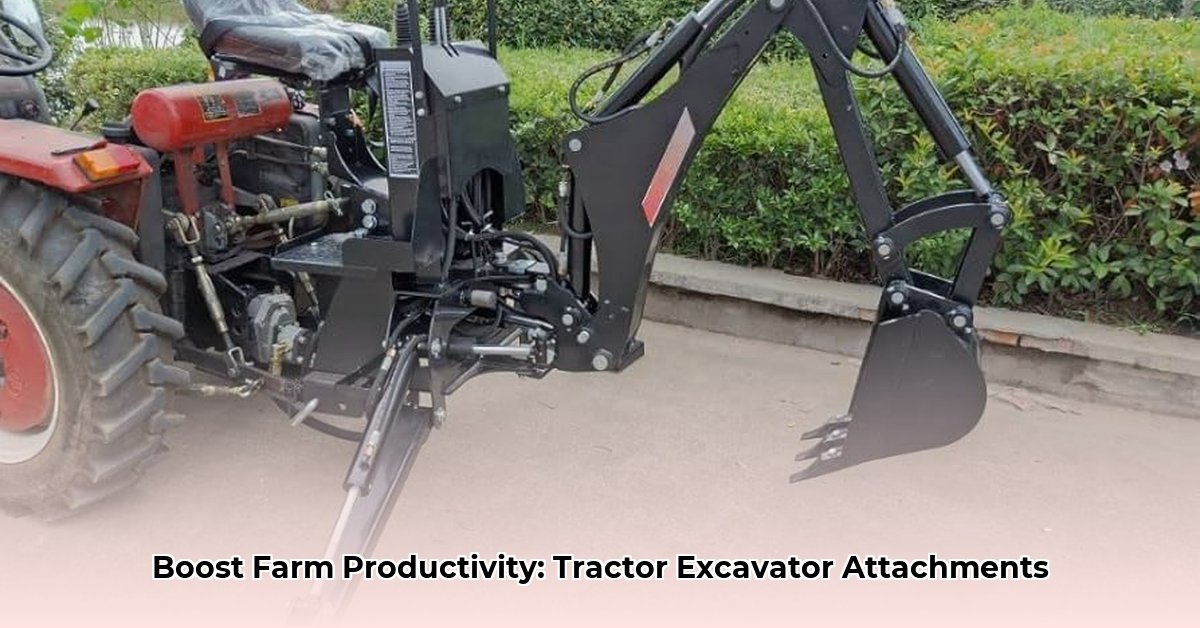
Choosing the right backhoe attachment for your tractor is a crucial decision impacting farm efficiency and profitability. This guide helps you navigate the selection process, comparing popular brands and key features to ensure you make an informed choice. Are you ready to optimize your farm operations? Let's begin. For more information on 3-point hitch implements, check out this helpful resource: 3-point hitch guide.
Understanding Your Needs and Tractor Capabilities
Before exploring specific models, assess your farm's requirements. What types of digging tasks will the backhoe primarily perform? How deep do you typically need to dig? What is the volume of material you'll be moving? Answering these questions helps you determine the necessary backhoe size and features. Equally crucial is understanding your tractor's limitations. Consult your tractor's manual to confirm its horsepower, PTO (Power Take-Off) horsepower, lift capacity, and hydraulic system capabilities. Overloading your tractor can lead to damage, inefficiency, and potential safety hazards. Remember, "Knowing your tractor's capabilities is the first step in preventing costly mistakes," advises Dr. Emily Carter, Agricultural Engineering Professor at Purdue University.
Key Features to Consider: A Detailed Comparison
Several key features differentiate tractor backhoes. Understanding these distinctions will guide you towards the best fit for your farm.
Digging Depth and Reach
Digging depth significantly impacts the range of tasks you can accomplish. Backhoes range in depth from approximately 7 feet to over 11 feet. Consider the typical depth required for your projects. A longer reach also minimizes the need for frequent tractor repositioning, boosting efficiency.
Power Requirements
The backhoe's power requirement, usually expressed in PTO horsepower, directly correlates with its digging force and capacity. Incorrectly matching the backhoe's power needs to your tractor's capabilities can result in reduced efficiency or even damage to the tractor. Always cross-reference the backhoe's specifications with your tractor's manual to ensure compatibility. For example, a backhoe requiring 25 PTO horsepower will not work efficiently with a weaker tractor.
Weight and Handling
Backhoe weight varies considerably, ranging from approximately 995 to over 3000 pounds. Heavier models necessitate robust handling equipment and may present challenges during transport and loading. Consider your farm's infrastructure and your ability to safely manage the weight of the chosen backhoe.
Attachment Method
Backhoes typically attach using either a three-point hitch or a subframe. The choice depends on your tractor's design and your preference for stability and ease of attachment. Research the method best suited for your specific tractor model.
Bucket Size and Versatility
Multiple bucket sizes add versatility, allowing you to adapt the backhoe to various tasks, from trenching and post-hole digging to material handling. Assess the variety of jobs you anticipate and choose a backhoe offering appropriate size options.
Comparing Popular Brands: WoodMaxx vs. Bradco/Ansung
Two prominent brands, WoodMaxx and Bradco/Ansung, offer a range of backhoe attachments. While both use durable steel construction, their specifications and price points differ significantly.
| Feature | WoodMaxx | Bradco/Ansung |
|---|---|---|
| Digging Depth | 7-9 feet | 11+ feet |
| Power Requirement | 15-25 PTO HP | Significantly higher |
| Weight | 995-1150 lbs | 1500-3000 lbs |
| Price | Generally more affordable | Premium pricing |
| Versatility | Depends on available bucket options | High, due to availability of various buckets |
WoodMaxx backhoes are often considered reliable workhorses suitable for everyday tasks, while Bradco/Ansung models are viewed as more powerful, suitable for larger-scale projects and demanding applications. The best choice depends on your individual needs and budget.
Potential Problems and Mitigation Strategies
While durable, backhoes can experience malfunctions. Regular maintenance and operator training are crucial to minimize downtime and potential damage. Addressing issues promptly is key to preventing escalating problems.
A Step-by-Step Guide to Selecting Your Backhoe Attachment
- Assess your farm's needs: Define the typical digging depth, soil type, and material volume you'll handle.
- Verify your tractor's specifications: Consult your tractor's manual to ensure compatibility with the backhoe's power and weight requirements.
- Compare Backhoe Models: Research models from WoodMaxx and Bradco/Ansung, meticulously comparing digging force, bucket size, and weight.
- Review User Feedback: Examine user reviews to assess ease of installation, durability, and overall performance.
- Evaluate Pricing and Long-Term Costs: Factor in the initial cost, maintenance requirements, and potential repair expenses.
- Make your decision: Choose the model that best aligns with your farm's needs and your tractor's capabilities.
Essential Considerations: PTO vs. Dedicated Hydraulic Systems
Choosing between a PTO-driven system and a dedicated hydraulic system impacts performance and cost. PTO systems typically cost less upfront but may offer reduced hydraulic flow, potentially slowing work. Dedicated hydraulic systems offer smoother operation, greater control, and enhanced precision, but at a greater initial cost. Weigh these trade-offs to select the system that best fits your workflow and budget.
Key Takeaways:
- Selecting a backhoe requires careful consideration of your farm's tasks and your tractor's capabilities.
- Matching backhoe power and weight to your tractor is crucial for preventing damage and ensuring efficiency.
- Comparing models from different manufacturers, such as WoodMaxx and Bradco/Ansung, helps determine the best fit.
- Regular maintenance and operator training are essential for preventing equipment malfunctions and ensuring longevity.
- Understanding the differences between PTO and dedicated hydraulic systems aids in selecting the optimal hydraulic system for your farm.
Remember to contact your local equipment dealer for personalized advice and support. Making an informed decision will significantly boost your farm's productivity and long-term success.